
EMDR as Trauma Therapy
“There are wounds that never show on the body that are deeper and more hurtful than anything that bleeds.”
– Laurell K. Hamilton
Trauma is an innate response to an alarming event that overwhelms an individual’s ability to cope, causes feelings of helplessness, and diminishes their sense of self and their ability to feel the full range of emotions and experiences. Humans process trauma very differently from one another. For many, traumatic events may cause excruciating, long-term internal pain, while others will only be negatively affected for a short duration of time. As a society, we often associate trauma as a result of extreme tangible events such as war, a natural disaster, or a violent physical attack. However, more common traumatic circumstances include the abuse of power, witnessing a terrifying event, the loss of control, betrayal, physical injuries, and pain.
Signs and symptoms associated with trauma:
- Sadness
- Anger
- Fear
- Emotional numbness
- Flashbacks
- Nightmares
- Emotional outbursts
- Difficulty with relationships
- Anxiety
- Depression
- Substance use disorders
- Emotionally labile
Defining EMDR
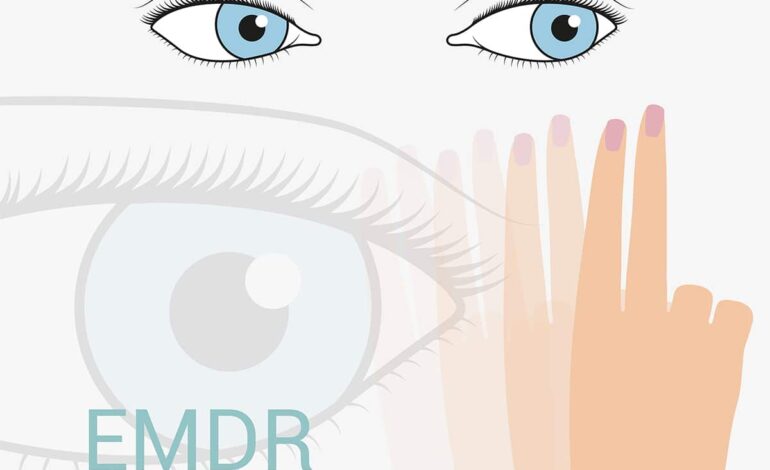
Eye movement desensitization and reprocessing (EMDR) is a psychotherapy approach used by therapists to help individuals recognize, process, and work through their trauma in a private, healthy, and safe manner. The client does not have to relive the trauma but instead focuses on the troubling memory and emotions associated with the traumatic event. EMDR uses a mechanism known as eye-movement tracking, which involves focusing on a traumatic event. At the same time, the client uses side-to-side eye movement to track external stimuli such as the wave of a finger. This bilateral stimulation is similar to the biological mechanisms involved in Rapid Eye Movement (REM) sleep. It is in this stage that internal associations are recognized, and clients begin to process the memory and disturbing feelings that are associated with the traumatic event. After each phase of bilateral movement, the therapist asks the client how they feel, and this process continues until the memory of the trauma is no longer disturbing. Over time, these distressing feelings and associations are replaced with empowerment and strength.
Can I benefit from EMDR?
EMDR is an evidence-based trauma therapy that is primarily used for individuals who are experiencing posttraumatic stress disorder; however, individuals do not have to be diagnosed with PTSD to benefit from EMDR. Trauma is often associated with veterans; however, trauma can affect anyone, and as a result, EMDR is a mechanism that can be used for any individuals who are experiencing lasting effects from a traumatic event. Whether you are a first responder, a war veteran, a rape victim, a single mom with a history of domestic abuse, a refugee, or a victim of a terrible crime, EMDR can replace negative flashbacks and disturbing memories with positive affirmations and healthy emotions. The goal is not to erase or forget the trauma but to dissociate negative internal feelings and memories that are ingrained in the individual because of the traumatic event. Overcoming trauma is not easy, but it is possible.
AKUA IS HERE TO HELP!
If you or someone you love is struggling with substance use or a mental health disorder, AKUA can help. AKUA Mind Body provides an integrative treatment approach with multiple levels of care from detox, and residential to intensive outpatient programs.
With several facilities throughout Orange County, Sacramento, and San Diego, California, we aim to provide our clients with a solid foundation for healing and transformation. Gender-specific and Co-ed facilities are available.
Call our 24/7 admissions helpline to seek help today!
You might also like

Love Yourself this Valentine’s Day: Tips for Staying Sober
Reading Time: < 1 MinutesValentine’s Day can be a challenging time for those in recovery, with an emphasis on romantic love and celebration. But it’s important to remember that the most important love is the love you have for yourself. This Valentine’s Day, we want to offer some tips for staying sober and focusing on self-care. Here are a […]
Is Erasing Memories to Treat PTSD Ethical?
Reading Time: 3 MinutesMemories, although expressed differently, play a central part in our routine life. This includes the evolution of someone’s individuality which is conceived as a consequence of interconnections among memories. Various brain imaging studies have revealed that the part of the brain, called the hippocampus, is known to be crucial for memory formation. This stands equally […]

Set a Sober Routine for the Holidays
Reading Time: 3 MinutesI’m Not Drinking This Holiday Season. Why Can’t We Just Say It? It can be pretty unsettling to think about declining alcohol in an environment conducive to alcohol. Alcohol flows freely during the holidays, whether at holiday parties, around the dinner table, or during meal preparation. Many questions arise during the holidays and make us […]